

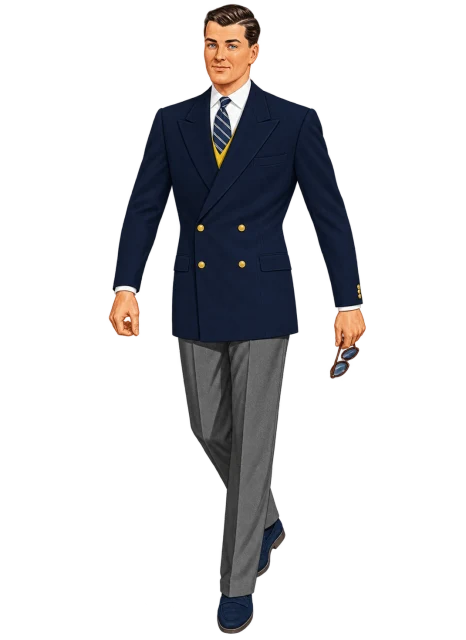
Working on a campaign at The Suit Studio means wearing more than one hat.
We're not just looking at the garment, the fit, and the overall look but, moreover, everything that has to happen around it for that to eventually reach the camera.
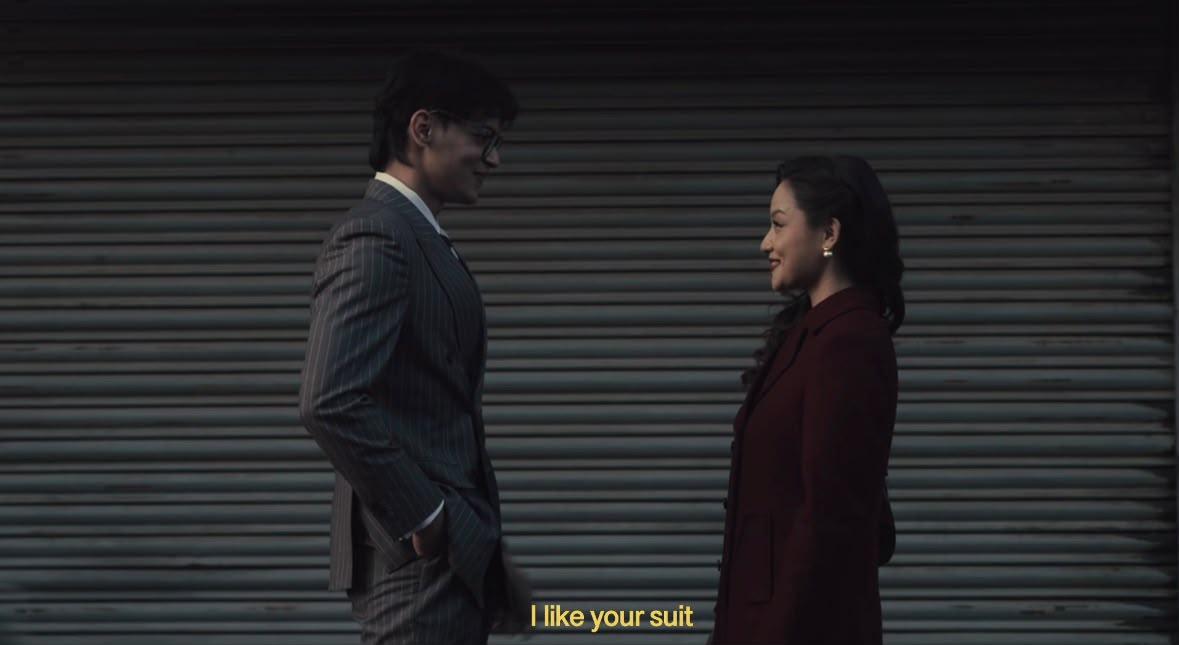
You see the final photograph: the suit sits perfectly, the tie is straight, the expression works, the light falls where it should.
What you don't see is someone stepping into the frame thirty seconds earlier to fix that tie.
Or the photographer checking the last shot again.
Or us discussing whether the jacket needs to sit a little differently.
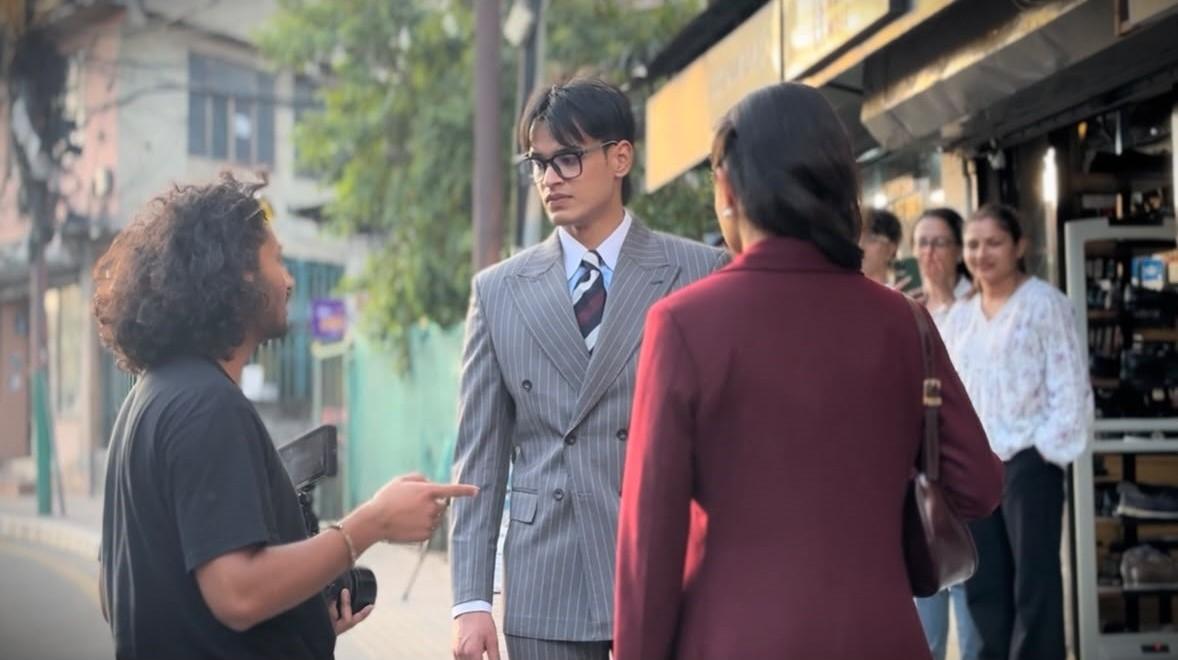
Or the traffic passing right beside us while we are trying to create a frame that looks completely composed.
That was probably my favourite part about being involved in this campaign for The Suit Studio. I was there not only as part of the team, but as the fashion designer and stylist, watching the clothes that we had spent so much time thinking about finally become part of a larger visual story.
Before the camera even starts
A shoot rarely starts when someone presses record.
For us, it starts much earlier.
The clothes have already gone through conversations about fabric, silhouette, proportions and styling. Then comes another layer: How should this person actually wear the clothes?
For this campaign, the grey pinstripe suit became one of the strongest elements visually. We paired it with a blue shirt and a deeper-toned tie, giving the entire look a very classic menswear foundation without making it feel old-fashioned.
And then shoot day begins.
Hair. Makeup. Clothes. Camera equipment. People arriving. People waiting. Someone looking for something that was definitely right there five minutes ago.
This is the part of a campaign that I wish people could see more often.
Because fashion is not nearly as effortless as the final photograph makes it appear.
The five-second fixes
We weren't working inside a perfectly controlled studio.
We were outside.
Kathmandu was very much Kathmandu.
Cars passed. Bikes passed. People walked behind the frame. The crew moved around the pavement with cameras. At times we were standing right beside an active road trying to make a very precise fashion image while normal city life continued around us.
At several points during the shoot, I found myself going back to the same details; the tie, collar, jacket, the way everything was sitting together.
A suit is incredibly unforgiving on camera.
A tie that has moved slightly off-centre might not bother you while you're standing on the street, but in a close-up, you see it immediately. A lapel can fold differently after a few movements. A shirt collar can shift. The jacket changes depending on how the person stands.
So there was a lot of:
"Wait."
"Don't move."
"Let me fix this."
"Okay. Now."
And then we'd get out of the frame and the camera would start rolling again.
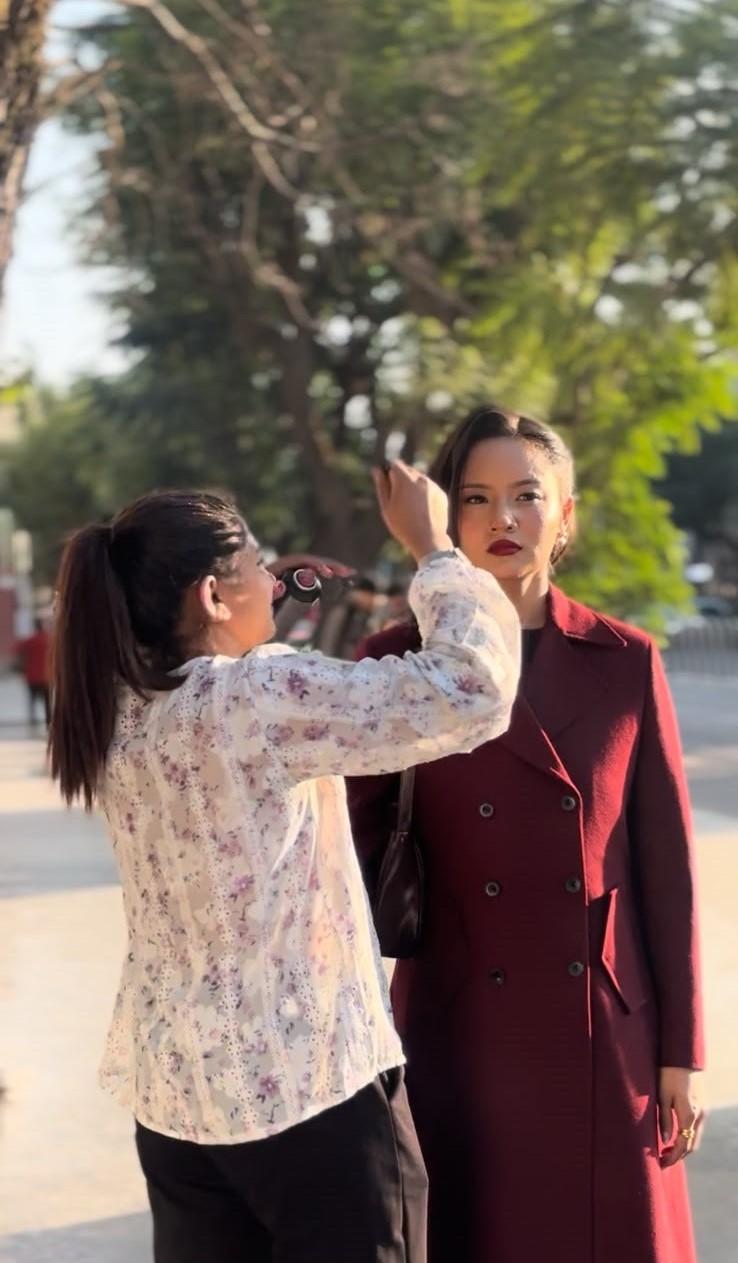
That, to me, is the real work behind styling.
Clothes look different once somebody lives in them
This is something I notice every time we shoot.
At a bespoke formal wear consultation, we can discuss the suit technically: shoulder, chest, waist suppression, trouser break, lapel width, shirt collar, tie.
On camera, those technical decisions suddenly become emotional ones.
Does he look comfortable?
Does the suit belong to him?
Does the styling feel believable?
Would someone actually want to be this person?
That last question matters more than we sometimes realise.
Because the suit itself is only one part of the picture. Tailoring gives us the structure, but styling, movement, personality and environment give it a life.
And when all of those things finally align, you stop noticing the individual elements.
You simply think: that looks right.
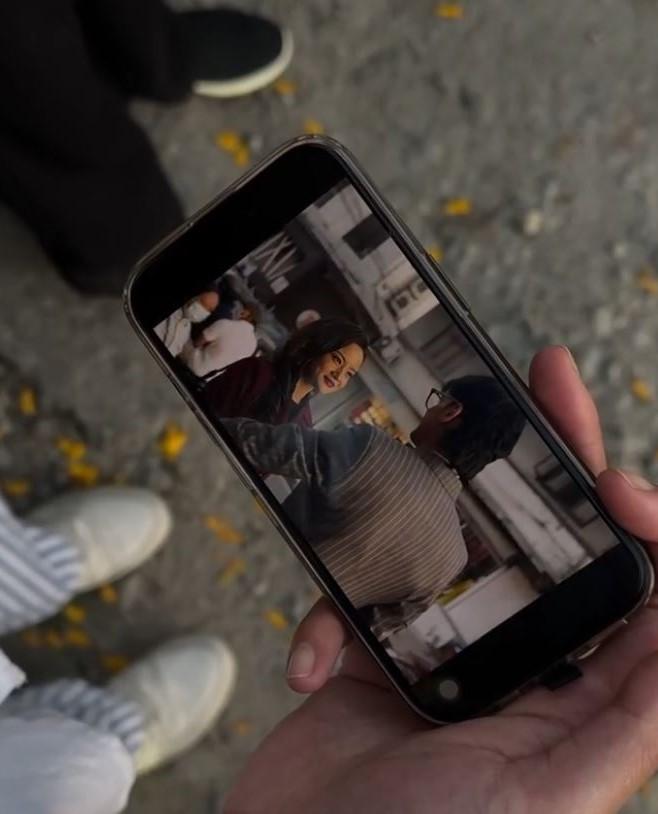
The glamorous part: everyone staring at a tiny screen
Another very real part of shoot day?
Standing around a camera.
A lot.
One shot finishes and suddenly everyone gravitates toward the photographer to see what just happened.
We zoom in.
Someone likes it.
Someone notices something.
We try another one.
The model moves.
We fix the clothes again.
The photographer changes the angle.
And slowly, through dozens of small decisions, you arrive at the image that everyone eventually sees on Instagram.
That process is probably why I enjoy shoots so much.
It's collaborative without being predictable.
- From the styling desk at The Suit Studio